
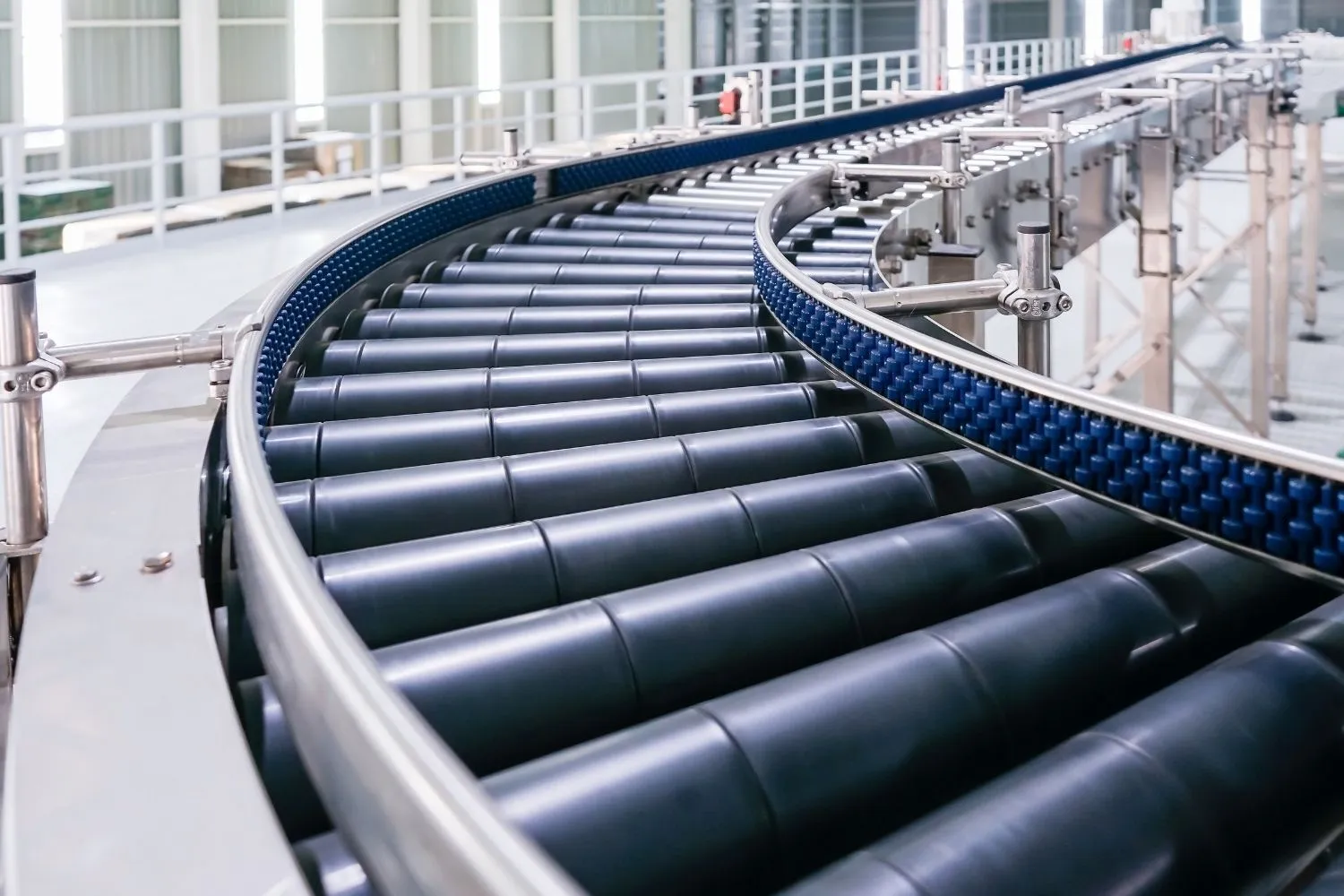
Conveyor systems, an indispensable part of modern industry, are practically an invention that transcends the limits of time and space. Consider that loads once carried by human hands, through hours of exhausting labour, now travel swiftly and efficiently from one point to another in a matter of seconds thanks to these remarkable systems. In this blog post, we will look in detail at the answer to the question of what a conveyor is, how conveyors work, the importance of conveyor chains, and the role these systems played in the industrial revolution. So get ready to set off on a journey into the fascinating world of conveyor belts. This journey will lighten not only heavy loads, but also your knowledge and curiosity!
What Is a Conveyor? Basic Definition and Working Principle
Answering the question of what a conveyor is means taking a journey to the heart of industrial processes. What is a conveyor? A conveyor is essentially a mechanised system used to move materials from one point to another. These systems are found across a wide range of settings, from factories to airports and from mines to packaging facilities, and they help speed up work processes and increase efficiency.
The working principle of conveyor systems is actually quite simple. A conveyor belt is usually mounted on a series of rollers or wheels. This belt is driven by a motor, so that materials are carried along it at a constant speed and in a regular manner. This movement either takes place in a continuous loop or progresses between a specific starting and ending point.
One of the most important advantages of conveyors is their ability to move large quantities of material quickly and efficiently. They also carry a lower risk of error compared with manual labour and offer significant advantages in terms of workplace safety. Today, conveyor systems are used not only for material handling but also in processes such as product sorting, separation and packaging.
With advances in technology, conveyor systems have become even more sophisticated and now stand as one of the cornerstones of industrial automation. The design and functionality of these systems can be customised according to the type of material being handled and the specific transport requirements, providing solutions suited to every industrial need.
The Importance and Types of Conveyor Chains
The answer to the question of what a conveyor is goes beyond industrial conveyor belts alone; the conveyor chains at the heart of these systems are also of great importance. Gurur Zincir , with our expertise in conveyor chain manufacturing, we want to highlight the role of this critical component in industrial processes.
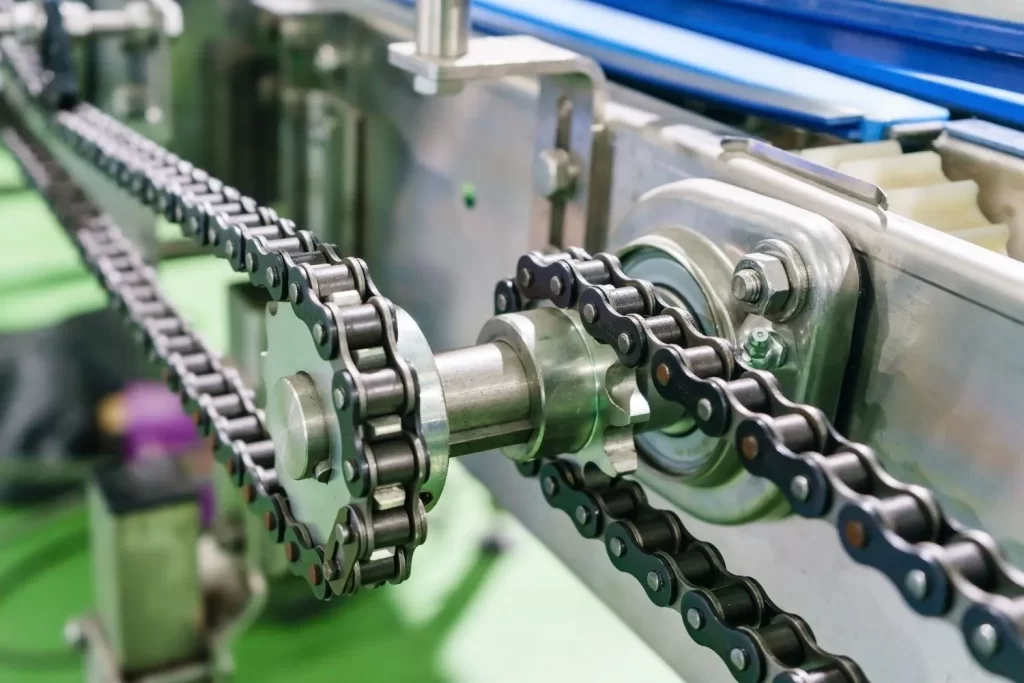
Conveyor chains are one of the most fundamental elements of conveyor systems. By driving the movement of the conveyor belts that carry materials, these chains create a continuous and regular flow of transport. The strength and durability of the chains are of critical importance to the efficiency and reliability of the entire system. As Gurur Zincir, we manufacture high-quality conveyor chains suited to every type of industrial need.
The variety of conveyor chains differs according to the sectors in which they are used and their transport requirements. For example, chains used in heavy industry are designed to carry larger and heavier materials, while chains produced for the food industry are made from materials that comply with hygiene standards. As Gurur Zincir, taking this diversity into account, we have developed a wide product range to offer the most suitable solutions for our customers' needs.
Conveyor chains are not limited to the function of material handling alone; they can also perform additional functions, such as product sequencing and packaging, that increase the speed and efficiency of production processes. For this reason, as Gurur Zincir, we adopt the highest quality standards in the design and manufacture of our chains. Each chain is rigorously tested for durability, efficiency and long service life, and is designed to deliver the best possible performance to our customers.
Conveyor chains are an integral part of every type of industrial conveyor system. As Gurur Zincir, with our expertise and innovative approach to manufacturing this important component, we contribute to making industrial processes more efficient and safer.
The Role and Importance of Conveyor Systems in Industry
The answer to the question of what a conveyor is reveals one of the cornerstones of modern industry. Conveyor systems, are mechanical devices used to transport materials or products along a production line or between different processing points. Their role and importance in industry are directly related to the increase in efficiency and effectiveness that these systems provide.
Particularly in factories engaged in mass production, conveyor systems speed up work processes and reduce costs by ensuring that products are transported quickly and in an orderly manner. Compared with human labour, these systems make fewer errors and reduce workplace safety risks. In addition, the continuity and smooth flow that conveyors bring to production lines help preserve product quality.
Industrial conveyor systems are widely used not only in factories but also in many other sectors, such as mining, agriculture, food processing and logistics. In the mining sector, for example, conveyor belts play a critical role in transporting extracted ore. In food processing plants, conveyors are vital for the hygienic and efficient processing and packaging of raw materials and products.
Today, conveyor systems have become even more sophisticated alongside growing technological advances. Smart sensors, automatic control systems and artificial intelligence integration have enabled conveyors to operate more intelligently, flexibly and effectively. These innovations allow for further automation of industrial processes and maximise the efficiency of production lines.
Conveyor systems are an indispensable part of production and transport processes in industry. These systems help businesses increase their production capacity, optimise their work processes and gain a competitive advantage. As one of the driving forces behind the development of modern industry, conveyors look set to retain their importance in the future.
Types of Conveyor Systems and Their Application Areas
Conveyor systems refer to a wide range of mechanised transport systems that are widely used in industry and greatly simplify work processes. The question of what a conveyor is relates to the basic definition of these systems, which appear in different forms and application areas in every sector. Here is an overview of the types of conveyor systems and the application areas in which they are used:
Belt Conveyors: Belt conveyors are one of the most widely used conveyor systems. They carry materials on belts, generally referred to as conveyor belts. They are frequently used in the food processing, packaging, mining and transport industries. Belt conveyors offer a reliable and continuous solution for moving products.
Roller Conveyors: Roller conveyors move materials on cylinders or wheels. They are used in particular for transporting heavy loads. Roller conveyors are the preferred choice for baggage handling at airports, warehouse logistics and material handling applications.
Chain Conveyors: Chain conveyors carry out the transport function via a chain system. They are typically used in assembly lines, automotive manufacturing and metalworking industries. This type of conveyor stands out for its durability and precise carrying capacity.
Pallet Conveyors: Pallet conveyors allow products to be transported on pallets. They are typically used in warehouse automation and for moving large volumes of product. They are ideal for transporting and organising products in groups.
High-Speed Conveyors: High-speed conveyors are used in industries that require high-speed transport. They are especially preferred for ensuring fast movement in product sorting and packaging processes.
Telescopic Conveyors: Telescopic conveyors are designed for transporting materials over long distances. They are used for long-distance handling operations at ports, warehouses and transport terminals.
The various types of conveyor system are designed to meet the different needs of industry. Each type delivers optimal performance in a specific application area and makes business processes more efficient. This diversity ensures that conveyor systems remain an indispensable part of industry.
Innovative Technologies in Conveyor Systems and Their Future
The question of what a conveyor is has always been examined through the lens of innovative technology, as part of the evolution of industrial processes. Conveyor systems have long served as a fundamental tool for moving and processing materials. In today's world, however, conveyors have become far smarter, more flexible and more efficient.
One of the biggest innovations in conveyor systems has come with the rise of automation. The integration of smart sensors, data analytics and artificial intelligence enables conveyors to operate more efficiently. These technologies make it possible to track, sort and even automatically package products. Conveyor systems now have the potential to go beyond mere transport and optimise entire production processes.
In the future, conveyor systems are expected to become even more innovative. Integration with autonomous transport systems, particularly in the logistics sector, could enable materials to move faster and more efficiently. In addition, energy-efficient designs and environmental sustainability measures are set to play an even greater role in the future of conveyor systems.
The future of conveyor systems will be shaped by even more connected and intelligent production processes. Internet of Things (IoT) technology offers the opportunity to integrate conveyor systems across different industries via a single network. This means better traceability, predictive maintenance and continuous improvement.
Conveyor systems are a pioneering application area for innovative technologies in industry. They continue to become smarter by the day, transforming production and logistics processes. In future, conveyors are expected to play an even more important role and contribute to making industrial processes more efficient. Conveyor systems will continue to hold their importance as one of the cornerstones of the industrial world.
Conveyor Maintenance and Safety Measures
Conveyor systems are an indispensable part of industrial processes, and starting with the question ‘What is a conveyor?’ is important for understanding the basic definition of these systems. However, for a conveyor to operate correctly, regular maintenance and safety measures are required. Here is what you need to know about conveyor maintenance and safety measures:
Conveyor Maintenance:
Periodic Cleaning: Dust, dirt and material residue accumulating on the conveyor belt can adversely affect system efficiency. Regular cleaning should therefore be carried out.
Lubrication: Lubricating moving parts such as conveyor chains and rollers reduces wear and extends service life. A lubrication schedule should be established.
Checks and Inspections: Periodic checks should be carried out to ensure the conveyor is operating properly and to detect any damage.
Parts Replacement: Replacing worn or damaged parts in good time helps prevent breakdowns.
Conveyor Safety:
Training: All employees should be trained on the safe use of conveyors. It is important to recognise hazardous areas, emergency procedures and buttons.
Protective Equipment: In addition to the conveyors themselves, secure hazardous areas with protective cages, covers or barriers.
Emergency Stop: Conveyors must be fitted with emergency stop buttons. Quick access to these buttons must be ensured and employees must be trained accordingly.
Hand Protection: Employees' hands must be protected against moving parts. The use of gloves is generally not recommended.
High Noise Levels and Dust Control: Prolonged exposure can lead to hearing loss or respiratory problems. It is therefore important to use the necessary protective equipment.
The question ‘What is a conveyor?’ explains the basic definition of these systems, but regular maintenance and safety measures are required for them to be used safely and efficiently. These measures help ensure your business processes run more safely and smoothly.
Selection and Design Features of Conveyor Systems
Conveyor systems are an indispensable part of industrial processes, and the question 'What is a conveyor?' is a first step towards understanding the fundamental definition of these systems. These mechanised systems enable materials or products to be transported from one point to another. Here is some important information about the selection and design of conveyor systems:
Various Conveyor Systems: Conveyor systems come in many different types, each serving specific application areas. There are belt conveyors, roller conveyors, chain conveyors and many other types. Each type is designed to meet different needs.
The Role of Conveyor Chains: Conveyor chains are a fundamental component of conveyor systems, and their quality is of great importance. Reliability and durability are essential to the reliability of conveyor systems. Conveyor chains are a critical factor affecting the system's performance.
The Importance of Design: When selecting a conveyor system, the type, quantity, speed and operating conditions of the material to be transported must be taken into account. During the design stage, factors such as safety, efficiency and energy efficiency should also be considered.
Gurur Zincir's Conveyor Solutions: As Gurur Zincir, we are a leader in the manufacture of conveyor systems and chains, and we offer high-quality products. We provide support to help you optimise your conveyor systems and improve your industrial processes.
This journey, which begins with the question 'What is a conveyor?', is an important step towards selecting and designing the right conveyor system. Conveyor systems are a powerful tool for increasing the efficiency of your industrial processes, and with the right choices, you can maximise this potential.