

12 Critical Criteria for Choosing a Custom Chain Manufacturer
Standard chains may be sufficient for many applications; however, in certain sectors and certain machines, working with a standard product quickly reaches its limits. In situations such as non-standard dimensions, the need for combined conveying and pushing functions, corrosive environments, high impact loads, special attachment requirements, or chronic failure problems, custom chain solutions come into play. At this point, the critical question is no longer "which chain should we buy?" but "which custom chain manufacturer should we work with?"
Choosing a custom chain manufacturer is not simply a matter of collecting quotes. The company you choose directly affects product performance, delivery reliability, ease of maintenance, and even the continuity of your production line. The wrong manufacturer can cost your business time and money through products that look right in terms of dimensions but fail to meet expectations on site, are delivered late, or come without technical support.
Below, we discuss in detail the key criteria to consider when choosing a custom chain manufacturer. This framework will strengthen the decision-making process not only for procurement teams but also for maintenance managers and machine designers.
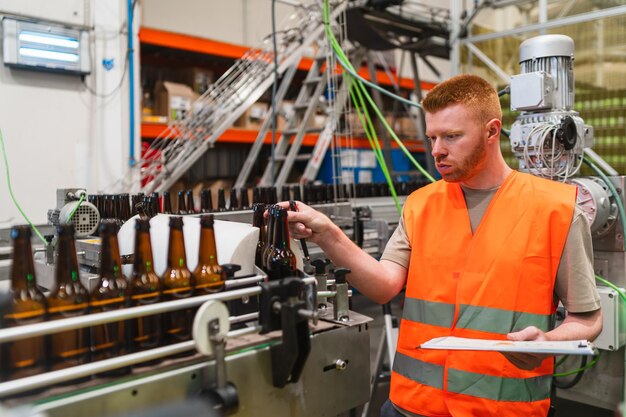
1. Just a Manufacturer, or an Engineering Partner?
When it comes to custom chain requirements, the real value lies not simply in the company's manufacturing capability, but in its ability to understand the problem and develop a solution. A good manufacturer does not just quote a price when a sample or drawing arrives. They ask what the application does, what loads it operates under, what environmental conditions it is exposed to, and what the current problem actually is.
This approach is very important, because custom chain projects are often the result of a problem on site. If the manufacturer produces an exact copy without understanding the application, the same old problem can persist in the new part. Companies that carry out technical questioning and, where necessary, suggest alternatives are therefore more reliable partners.
2. Competence in Working from Technical Drawings and Samples
Complete technical drawings are not always available in custom manufacturing processes. Sometimes there is only an old chain sample, and sometimes only partial measurements taken from the machine. In such cases, the manufacturer's reverse engineering capability comes into play. Companies with strong skills in taking measurements from samples, assessing tolerances, working out attachment structures, and producing technical drawings have a clear advantage.
Manufacturers who manage drawing revision processes well also reduce the risk of error. Not proceeding to production on critical dimensions without customer approval is a sign of professionalism in custom projects.
3. Material Knowledge and Suitable Material Recommendation
Material knowledge is a critical criterion when choosing a custom chain manufacturer, because not every custom solution can be resolved simply by changing the shape. Sometimes a different steel grade, stainless quality, surface coating, pin hardness or bush material is required. The manufacturer should be able to explain which material is suitable, and why, based on the application's load and environmental conditions.
For example, recommending stainless steel for a humid line makes sense, but the chain's mechanical load-bearing capacity must also be assessed at the same time. Similarly, a high-impact system may require a more durable pin and plate design. Preference should be given to a manufacturer who recommends the right solution, not just one who does what is asked.
4. Production Infrastructure and Machining Capability
A custom chain solution often requires the ability to machine special components. Attachment welding, precision holes, special pins, heat treatment, surface coating and controlled assembly processes all determine production quality. For this reason, it is worth questioning whether the company is genuinely a manufacturer, which processes it carries out in-house, and how it manages each process.
The following questions are useful:
- Does it machine critical parts in-house?
- How is the heat treatment and quality control process managed?
- Does it have references in producing custom attachments?
- Can it ensure consistency in repeat production?
If a company undertaking custom projects lacks adequate production infrastructure, the result can be different quality with every order.
5. Quality Control and Dimensional Consistency
Quality control is even more important for non-standard products, because even small dimensional deviations can cause incompatibility in the field. It should therefore be clear which dimensions the manufacturer verifies in the final inspection, how it manages critical tolerances, and how it ensures product consistency.
Reliable manufacturers generally have the following habits:
- Creating a control plan for critical dimensions
- Providing a first sample or approval sample
- Sharing a dimensional report when required
- Ensuring batch-based traceability
- Maintaining the same standard on repeat orders
This consistency is especially valuable for OEM manufacturers, because any variation in the field can come back as a customer complaint.
6. Delivery Reliability and Planning Discipline
Custom chains often arise from a critical need on the production line, which is why the delivery date is just as important as product quality. A manufacturer that looks technically sound but consistently misses deadlines poses a serious risk to the business. Especially in the event of an unplanned stoppage, a late-arriving product can affect the entire production plan.
For this reason, it is important to consider not only the lead time quoted by the manufacturer, but also how consistently they adhere to it. Companies able to offer rapid prototyping, sample production or urgent production support when needed are a clear preference.
7. Sector Experience and References
Not every chain manufacturer performs equally well in every sector. Fields such as food, automotive, packaging, heavy industry, ceramics, textiles or special machinery manufacturing each come with different expectations. A manufacturer experienced in similar applications spots potential risks early on and asks the right questions.
This is why asking for references matters. Whether the manufacturer has worked in similar sectors, has successfully delivered non-standard projects, and has built long-term customer relationships all contribute to the decision-making process.
8. Communication Speed and Quality of Technical Feedback
In custom projects, communication is just as important as the product itself. When clarifying dimensions, revisions, drawing approvals, sample evaluations or production updates are delayed, the whole process is held up. For this reason, how quickly a manufacturer responds to emails, calls or technical meetings is also an important indicator of quality.
Responding quickly is not enough on its own; the feedback given must also be technically satisfying. Explanations that establish a clear cause-and-effect relationship should be preferred over vague statements such as "sure" or "we'll manage". Companies that communicate with technical clarity inspire confidence.
9. After-Sales Support and Approach to Problem-Solving
In custom manufacturing, things may not go perfectly on the first attempt. This is entirely normal. What matters here is the manufacturer's approach when a problem arises. When the product fails to deliver the expected performance in the field, does the company take ownership of the situation? Does it carry out an analysis? Does it propose a revision? Or does it place the responsibility entirely on the user?
Manufacturers that provide after-sales support become more valuable business partners in the long run, because the goal is not a single order but the sustainable operation of the system.
10. Pricing Transparency and Cost Approach
In custom chain projects, prices naturally vary more than they do for standard products. What matters here is not finding the cheapest price, but understanding what the price is based on. Material quality, processing steps, heat treatment, coating, sample work and lead time all affect the cost.
Manufacturers that operate transparently clearly state the scope of the quotation, any available options, and the technical assumptions involved. This makes comparing quotations far more meaningful. Otherwise, a low-priced offer may later create additional costs due to incomplete scope.
11. Flexibility and Customisation Capability
Some manufacturers struggle even with minor revisions, while others can adapt quickly to customer needs. This flexibility is valuable in custom chain projects, since attachment form, connection dimensions or surface detail may change as the application progresses. The manufacturer's approach to these revisions affects the project's chances of success.
It also requires more than one-off custom manufacturing — repeat orders afterwards need to be managed so they maintain the same standard. Companies that can offer both flexibility and consistency stand out.
12. The Advantage of Local Access and Fast Support
Local access to a custom chain manufacturer often provides a serious advantage. On-site meetings, sample sharing, dimension verification, quick revisions and support in urgent needs are all much easier to manage. Imported solutions may be necessary for some projects, but in terms of communication and lead time, the proximity of a local manufacturer usually gives the business more speed.
For businesses under high breakdown pressure in particular, working with an easily accessible manufacturer makes a huge difference. Being able to make direct contact with the technical team shortens problem-solving time.
Short Checklist Questions to Ask When Deciding
Before choosing a manufacturer, it's useful to ask the following questions:
- Do they ask questions to understand the application?
- Can they derive technical work from a sample or drawing?
- Can they justify their material and solution recommendation?
- Do they have references in a similar industry?
- Are they reliable on lead time?
- Do they offer revisions and after-sales support?
- Can they deliver the same quality on repeat orders?
Companies that give strong answers to these questions are better suited to becoming a long-term business partner.
Conclusion
What to look for when choosing a custom chain manufacturer goes far beyond price, lead time and product dimensions. Engineering approach, material knowledge, production infrastructure, quality control, communication quality, industry experience and after-sales support must all be evaluated together. Because a custom chain isn't just a part that's been ordered — it's often the solution to a critical problem on the production line.
Working with the right manufacturer doesn't just mean getting a suitable product. It also means reducing breakdown risk, lowering maintenance costs and giving the business technical assurance. This is why companies like Gurur Makina — ones that understand the application, have custom production capability and can maintain technical communication — provide a strong advantage in B2B purchasing processes.
Why Is a Prototype and Sample Approach Valuable?
In custom chain projects, going straight to mass production isn't always the right path — especially when a critical attachment, special geometry or a previously unverified design is involved, prototyping or preliminary sample work provides a major advantage. This step allows the chain's fit within the system, motion flow, sprocket compatibility and ease of assembly to be seen before production.
Manufacturers who take the sample approach seriously reduce field risks at an early stage. The customer side also gets the chance to check details on the actual application that weren't noticed in the drawing. This reduces both revision costs and post-delivery surprises.
Long-Term Collaboration Potential Also Matters
A need for custom chains often looks like a one-off request; however, after a successful solution, the same manufacturer can become a strategic partner across different projects as well. For this reason, when choosing a company, it is important to consider not only today's order but also the potential for future technical collaboration. Manufacturers that keep an organised drawing archive, respond quickly to repeat orders and are familiar with the customer's machine fleet provide considerable operational convenience over time.
Manufacturers that build up institutional memory reduce the need to explain everything from scratch on every new project. This both increases speed and lowers the risk of error.
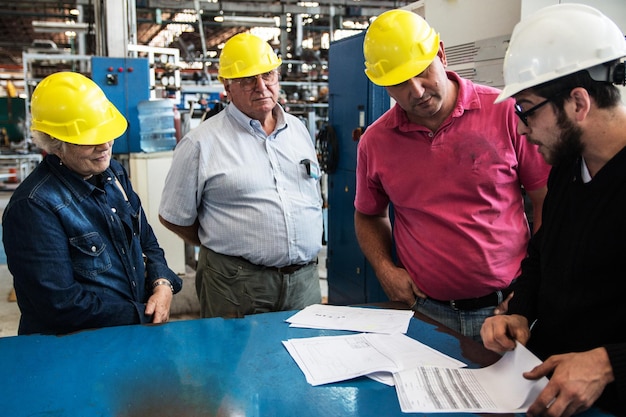
Look Not Only at Today's Need, But Also at the Backup Process
For machines using custom chains, how quickly a second order can be placed is very important. Archiving drawings, keeping part coding organised and recording previous revisions provide great convenience for the business. Otherwise, the process starts from scratch with every new order, dimensions have to be discussed again, and time is lost.
For this reason, documentation discipline and repeat-production capability must always be checked when choosing a manufacturer. Especially for critical machines, a manufacturer that can maintain the same quality and offer a fast backup plan significantly reduces operational risks.