
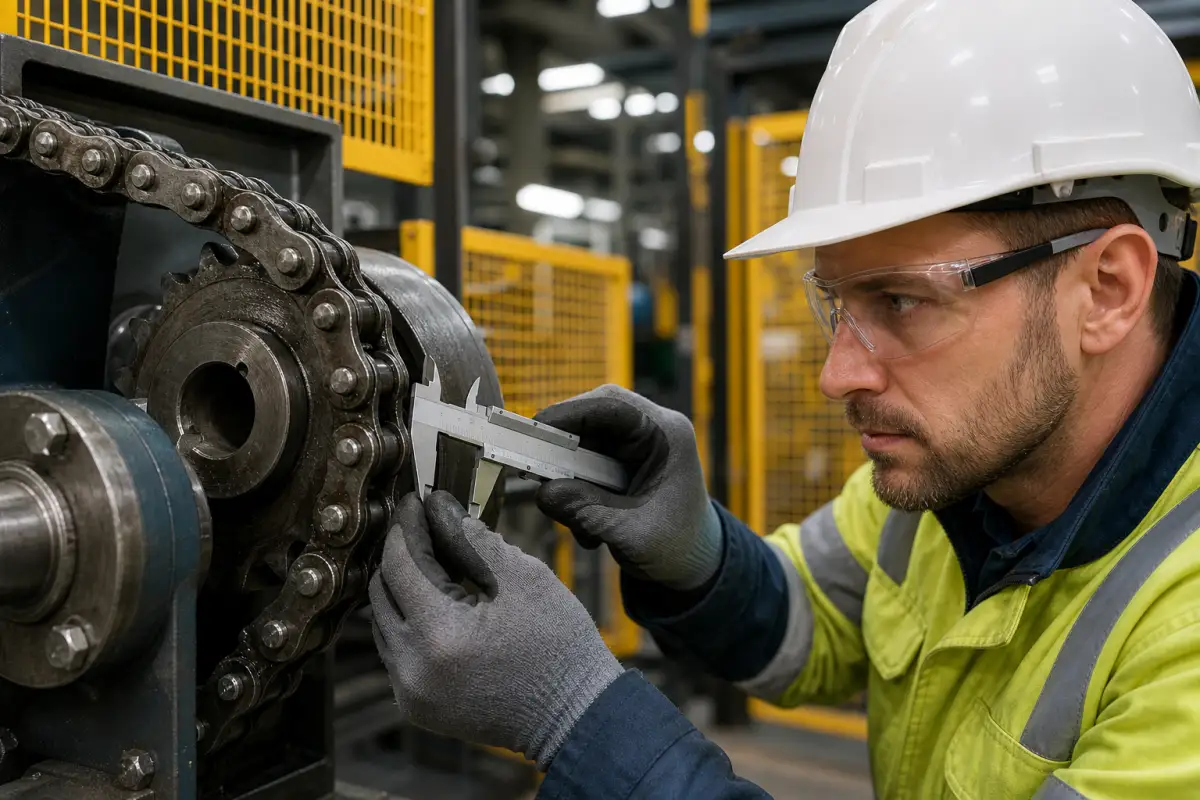
In industrial production facilities, chain and gear systems form the backbone of power transmission and material handling. The safe and uninterrupted operation of these systems depends not only on selecting the right product, but also on strict chain and gear safety standardscompliance and regular periodic inspection. In Türkiye and on a global scale, occupational health and safety regulations and international standards set out clear rules at every stage, from the design of chain-gear systems to their maintenance.
In this article, we will examine in detail how safety standards are applied in industrial chain and gear systems, the periodic inspection processes required by ISO and DIN standards, and Gurur Makina's expertise in this field.
Why Is Safety Critical in Chain and Gear Systems?
Industrial chain and gear systems are mechanical components that remain in continuous motion under high loads. A fault or breakage occurring in these systems not only leads to production loss, but also creates serious occupational safety risks. Chain and gear safety standards, define the minimum requirements that must be met in the design, production, assembly and maintenance processes in order to minimise these risks.
According to statistical data, approximately 12% of industrial work accidents arise from mechanical power transmission systems. Chain breakages, gear wear and inadequate protective covers are among the leading causes of these accidents. Compliance with safety standards has a direct impact on both personnel safety and operational continuity.
Occupational Accident Risks and Cost Implications
The cost of safety violations in chain-gear systems is not limited to repair expenses alone. Indirect costs such as unplanned downtime, production losses, legal penalties and reputational damage can reach 5 to 10 times the direct costs. For this reason, proactive compliance with safety standards should be regarded as a cost-effective strategy.
In Türkiye, Law No. 6331 on Occupational Health and Safety requires employers to ensure the safety of their employees. Under this law, having lifting and power transmission equipment periodically inspected is a legal obligation.
Industrial Chain and Sprocket Standards: ISO and DIN Norms
ISO 606:2015 — Short-Pitch Roller Chains
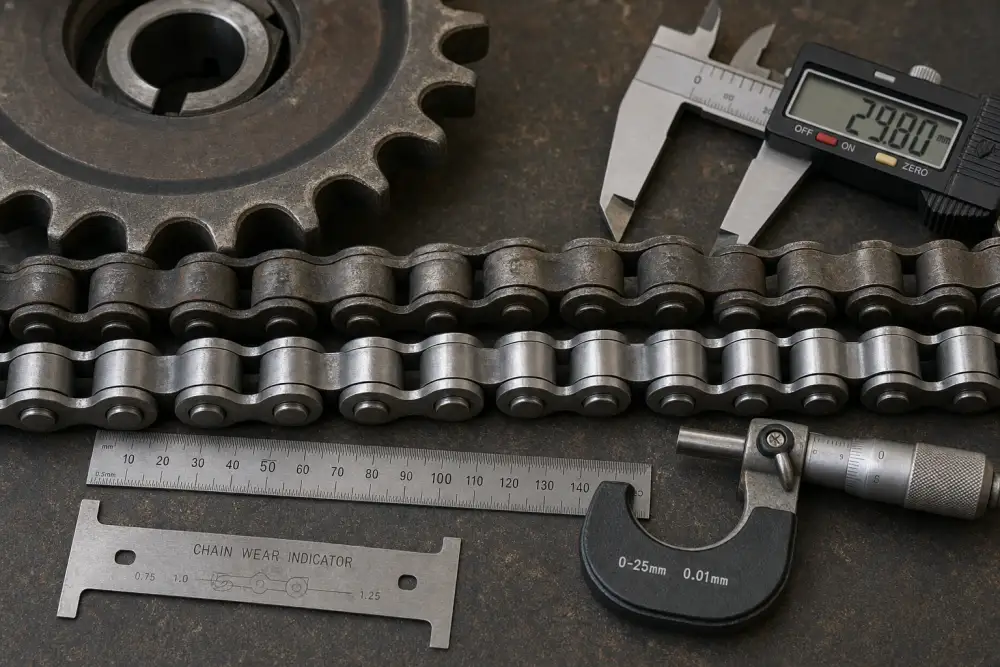
The ISO 606:2015 standard defines the dimensions, tolerances and measurement requirements for short-pitch roller chains, bush chains, attachments and associated sprockets. Manufacturing in compliance with this standard guarantees chain and sprocket compatibility. ISO 606:2015 , separate dimensional standards are set out for Series A (American type) and Series B (European type) chains.
ISO 10823:2004 — Guide to the Selection of Chain Sprockets
ISO 10823:2004provides guiding principles for the selection of roller chain and sprocket drive systems. This standard guides the calculation of critical parameters such as power transmission capacity, chain speed, sprocket diameter and centre distance. Correct chain-sprocket selection extends the system's service life and significantly reduces safety risks.
DIN 8187 and DIN 8188 — German Chain Standards
The DIN 8187 (European type) and DIN 8188 (American type) standards set out the manufacturing and quality requirements for roller chains. By defining the chain's minimum breaking load, pin tolerances and material grade, these standards guarantee safe operating conditions. For companies operating in the European market, compliance with DIN norms is a precondition for trade.
ISO 1275 — Double-Pitch Precision Roller Chains
Double-pitch roller chains, widely used in conveyor systems, are ISO 1275:2006 manufactured in accordance with this standard. This standard sets out the dimensional and durability criteria for both transmission and conveyor chains. Safety in conveyor applications is directly linked to compliance with this standard.
What Is Periodic Inspection and Why Is It Mandatory?
Periodic inspection is the process by which industrial equipment is examined by authorised personnel at set intervals. Chain and gear safety standards , the periodic inspection of chain and sprocket systems is a requirement of both national legislation (Law No. 6331 and its related regulations) and international norms. These inspections confirm that the system maintains safe operating conditions and prevent unplanned downtime by detecting potential faults in advance.
Legal Basis: Law No. 6331 and Related Regulations
In Türkiye, occupational health and safety legislation explicitly mandates the periodic inspection of lifting and power transmission equipment. The regulation published in the Official Gazette dated 25.06.2015 and numbered 29426 sets out the health and safety requirements for the use of work equipment. Under this regulation, all power transmission equipment, including chain and sprocket systems, must be inspected by authorised persons or organisations at specified intervals.
Periodic Inspection Intervals
The periodic inspection intervals for industrial chain and sprocket systems are determined according to the type of equipment, operating conditions and manufacturer recommendations. General practice is as follows:
- Visual inspection: At the start and end of every shift (by the operator)
- Detailed inspection: Monthly or quarterly periods (by the maintenance team)
- Comprehensive periodic inspection: Annually (by an authorised engineer or accredited body)
- Load testing: At 6-monthly intervals under heavy-duty conditions
These intervals should be shortened where the working environment is dusty, humid or corrosive. In addition, the inspection frequency should be increased for systems operating under heavy loads. Correct material selection in industrial chain and sprocket systemsalso has a direct effect on the need for periodic inspection.
Critical Parameters Checked During Periodic Inspection
Chain Elongation and Wear Measurement
Chain elongation is the most critical parameter determining chain life. According to ISO standards, elongation of between 2% and 3% in roller chains is regarded as a signal for replacement. Elongation is measured with millimetric precision over a specific number of links. Wear should be assessed not only on pins and bushes, but also on roller surfaces and sprocket tooth profiles.
Sprocket Tooth Profile and Wear Inspection
Sprocket wear results in poor engagement with the chain and loss of power transmission. The sprocket tooth profile is checked by measuring tooth thickness and by visual inspection. The sprocket must be replaced once wear exceeds 15-20% of the original tooth thickness. As sprocket wear also accelerates chain deterioration, it is important to assess both components together.
Lubrication Condition and Grease Analysis
Lubrication has a direct effect on the service life of chain-sprocket systems. During periodic inspection, the type, quantity and distribution of the lubricant are assessed. Insufficient lubrication leads to metal-to-metal contact and wear, while excessive lubrication can cause dust and dirt build-up. Lubrication strategies for industrial chain and sprocket systemsare the key to achieving this balance.
Safety Guards and Emergency Stop Systems
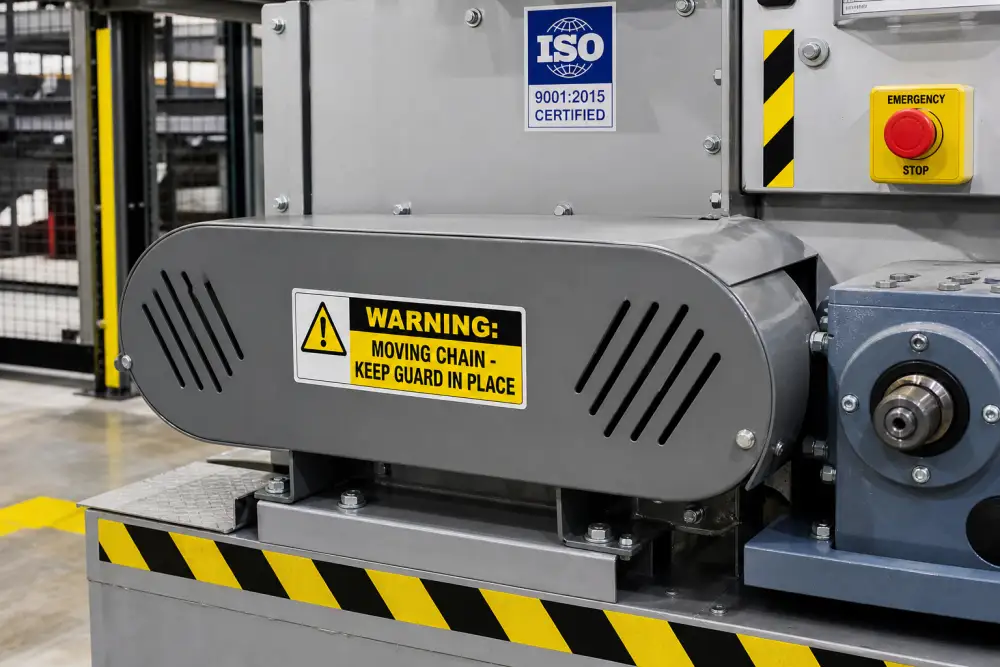
Protective covers, casings and emergency stop buttons fitted around chain and sprocket systems are mandatory requirements of safety standards. Periodic inspection assesses the integrity of this equipment. Damaged or missing guards pose a safety risk and must be repaired or replaced immediately. The design of protective systems must physically prevent operator access to the chain-sprocket area, while still allowing easy opening for maintenance.
Periodic Inspection Reporting and Documentation
Report Content and Standard Format
Periodic inspection reports are critical documents in terms of auditability and legal compliance. A standard periodic inspection report should include the following information:
- Date and location of the inspection
- Equipment description, serial number and manufacturer information
- Measurements taken and test results
- Non-conformities identified and their risk classes
- Corrective action recommendations and follow-up date
- Name, title and signature of the authorised person carrying out the inspection
- Next inspection date
Digital Tracking and Maintenance Management Systems
In modern industry, periodic inspection tracking is managed through digital maintenance management systems (CMMS). These systems automatically remind users of inspection dates, store historical records and provide trend analyses. Compared with paper-based systems, digital tracking reduces the risk of error and enables rapid document retrieval during legal audits.
Key Considerations for Compliance with Safety Standards
Safety at the Design Stage
Safety begins at the design stage. When designing a chain-sprocket system, the following factors should be assessed in line with safety standards:
- Safety factor: ISO standards specify the minimum safety factor (typically between 5 and 8). Design loads must be calculated to satisfy this factor.
- Redundancy: For critical systems, using a dual chain instead of a single chain, or integrating overload protection mechanisms, is recommended.
- Accessibility: Sufficient access space must be left for maintenance and inspection.
- Protective design: All rotating parts must be protected with inaccessible covers and guards.
Installation and Commissioning Safety
During the installation process, following the procedures in accordance with chain and gear safety standardsthe manufacturer's instructions is of vital importance. Incorrect installation can render safety guards non-functional and lead to system failures. Points to note during installation:
- Adjusting chain tension to the manufacturer's specified values
- Carrying out alignment checks with precision measuring instruments
- Fitting all safety covers completely
- Testing emergency stop systems
- Carrying out a no-load test at first start-up
For detailed information on installation safety, correct installation and assembly methods for chain and sprocket systems you can review our article.
Safety during Operation and Maintenance
Operational safety is an ongoing process. Operators and maintenance staff must be trained in the following areas:
- Safe operating limits of chain-sprocket systems
- Signs of abnormal noise, vibration and heat build-up
- Emergency stop procedures and intervention methods
- Rules for the use of personal protective equipment (PPE)
- Periodic inspection and record-keeping responsibilities
Consequences of Non-Compliance with Safety Standards
Legal and Criminal Sanctions
Under Law No. 6331, employers who fail to fulfil their occupational health and safety obligations are subject to administrative fines. As of 2026, the fine for failing to carry out periodic inspections is applied at the rate of one gross monthly minimum wage per employee. In addition, in the event of a workplace accident, criminal liability and compensation obligations arise.
Operational Losses
The operational consequences of non-compliance can be far more severe than legal sanctions. Unplanned downtime, production losses, equipment damage and rising maintenance costs are the indirect costs of failing to invest in safety standards. The hourly cost of a conveyor stoppage caused by a broken chain can run into thousands of lira, depending on the sector. Energy efficiency in industrial chain and gear systems , too, depends on safe working conditions.
Gurur Makina: Solutions Compliant with Safety Standards
As Ankara's leading chain and gear supplier Gurur Makina, ensures compliance with international safety standards across its entire product range. Its range of products, compliant with ISO 606, ISO 10823, DIN 8187/8188 and ISO 1275 standards, meets both the safety requirements and performance expectations of its customers.
Gurur Makina is not limited to product supply alone; it also offers its customers periodic inspection consultancy, appropriate product selection and technical support services. About Us as you can find the details on our page, for your specific needs contact you can contact us via our page.
Technical Capacity and Certification
Gurur Makina's technical capacity enables the selection of products that comply with safety standards. Product certification processes confirm that every product has the declared technical specifications. This gives customers a solid foundation for safety audits and legal exemption applications. On how to assess a supplier's technical capacity, you can read our article.
Conclusion: Compliance with Safety Standards Is Not a Choice, but a Necessity
In industrial chain and gear systems, compliance with chain and gear safety standardssafety standards is not a cost item, but a risk management strategy. Selecting products that comply with ISO and DIN standards, together with regular periodic inspections and proper maintenance practices, safeguards both personnel safety and business continuity. Investing in safety standards is the most effective way to prevent potential workplace accidents and production losses.
As Gurur Makina, we support your industrial operations by offering products fully compliant with safety standards, along with technical consultancy services. Chain and gear safety standards Contact us for detailed information and solutions tailored to your needs.